Mold Dog vs Traditional Inspection: Which Should You Choose?
- D&G Dogs

- Jul 11
- 7 min read
When you suspect mold in your home, especially if someone in the house is experiencing unexplained health symptoms, the hardest part is not always knowing that something is wrong.
It is knowing where to look.
Maybe there is a musty smell that comes and goes. Maybe symptoms improve when you leave the house. Maybe there was a leak months ago, but everything looks dry now. Or maybe you have already had testing done and still do not feel like you have a clear answer.
That is where the question usually comes up:
Should you hire a traditional mold inspector, or should you schedule a mold detection dog?
The honest answer is that both can be valuable. But if you suspect hidden mold, a trained mold detection dog can be one of the most helpful first steps because the dog is searching for the source of the odor, not just what is visible or what happens to be floating in the air at the time of testing.
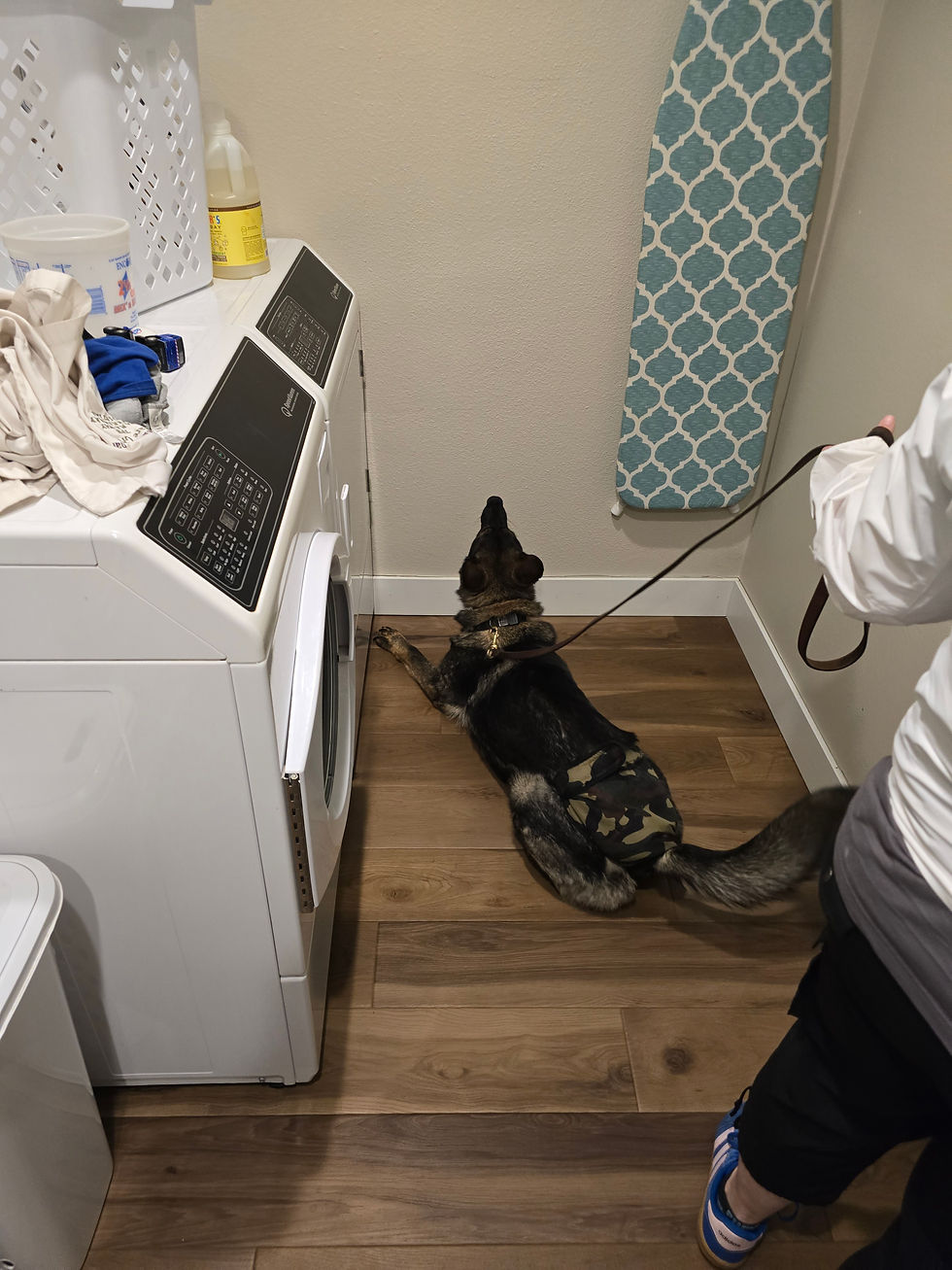
At D&G, Shannon and K-9 Whiskey specialize in helping homeowners find where toxic mold may be hiding, so they can stop guessing and make better decisions about testing, repairs, and remediation.
What Traditional Mold Inspections Do Well
A traditional mold inspection can include several different tools and methods, such as:
Visual inspection
Moisture meters
Thermal imaging
Air sampling
Surface sampling
ERMI or HERTSMI testing
HVAC inspection
Crawlspace or attic evaluation
These tools can be very useful. A good inspector can identify moisture problems, visible growth, building defects, ventilation issues, and areas that need further testing.
Traditional inspections are especially helpful when there is visible mold, known water damage, active moisture, or a need for lab documentation. For example, if there is staining on drywall, a leaking pipe, or a damp crawlspace, a traditional inspector may be able to document the issue, take samples, and provide a report that helps guide the next step.
The challenge is that mold is not always obvious.
Where Traditional Mold Inspections Can Fall Short
Mold often hides in places homeowners cannot easily see. It may be:
Behind walls
Under flooring
Inside crawlspaces
Around HVAC systems
In attics
Behind cabinets
Inside vehicles
Near old water damage that now looks dry
That is why mold can be so frustrating for homeowners dealing with symptoms. Everything can look “fine” on the surface, but the home still does not feel right.
Air testing can also be limited because it only captures what is in the air during that testing window. Mold spores may not be actively airborne at that exact moment. Airflow, humidity, recent cleaning, HVAC cycles, and whether windows or doors were open can all affect results.
Surface sampling is helpful when you already know where to sample. But if the mold is behind a wall or under flooring, you may not know where to test unless you start cutting into the home.
That is where K-9 mold detection can bring a different kind of clarity.
What a Mold Detection Dog Does Differently
A mold detection dog uses scent to help locate the source of mold odor.
At D&G, K-9 Whiskey is trained specifically for toxic mold detection. She is imprinted on 26 types of toxic mold and trained to ignore common, non-toxic molds that are naturally present in everyday environments.
That matters because the goal is not to have a dog alert to every harmless environmental mold floating around. The goal is targeted detection that helps homeowners identify areas of concern.
During a mold sweep, Shannon and Whiskey work as a team. Shannon first listens to your concerns, including symptoms, smells, past leaks, water damage, or areas of the home that feel suspicious. Then Whiskey performs a systematic search of the space.
When Whiskey alerts, she is helping narrow the search area.
That does not mean the wall automatically needs to be torn open that second. It means you now have better information about where testing, inspection, or further investigation may be most useful.
For homeowners who feel like they are guessing, that can be a major turning point.
Why Mold Dogs Are Especially Helpful for Hidden Mold
If you can see mold growing on a wall, you may not need a dog to tell you it is there. But many homeowners who call for K-9 mold detection are not dealing with obvious mold. They are dealing with uncertainty. They may have:
Unexplained health symptoms
A musty smell with no visible source
A home that feels worse in certain rooms
A child, spouse, or family member who feels better away from the house
A vehicle that smells musty
Previous testing that did not give a clear answer
In these situations, a mold dog can help identify where hidden mold odor may be coming from.
Whiskey may search areas like walls, flooring, crawlspaces, HVAC returns, vents, basements, garages, attics, furniture areas, and vehicles. The goal is to help locate likely source areas before a homeowner spends money opening walls, replacing materials, or testing random places.
This is one of the biggest advantages of K-9 mold detection.
It helps you stop guessing.
Mold Dog vs Traditional Inspection: Which Is Better?
The better question is not always “Which one is better?”
The better question is:
What kind of information do you need right now?
A traditional mold inspection is helpful for documenting visible issues, measuring moisture, collecting samples, and creating a report.
A mold dog is helpful for locating likely hidden sources of toxic mold odor, especially when the issue is not obvious.
In many cases, the best approach is to use both.
A K-9 mold inspection can help narrow down where the concern may be. Then a traditional mold inspector, contractor, or remediation professional can use that information to decide where to test, open, repair, or remediate.
Together, they can create a much clearer picture than either method alone.
Why We Do Not Perform Remediation
One important thing to know about D&G is that we do not perform remediation.
That is intentional.
Our job is to help locate areas of concern, not sell you demolition, cleanup, or repair work. Because we are not the company doing the remediation, our role stays focused on detection.
That matters when homeowners are already overwhelmed.
If you are worried about toxic mold, you deserve information from someone whose goal is to help you find the source, not sell you the next phase of work.
Once areas of concern are identified, you can bring in the appropriate professionals for testing, inspection, repair, or remediation.
The Biggest Misconception: All Mold Dogs Are the Same
One of the most common misconceptions about mold detection dogs is that they are all trained the same way.
They are not.
A mold dog is only as effective as the training behind the dog and the skill of the handler reading the search.
At D&G, Shannon brings more than 30 years of dog training experience and more than 500 hours of mold detection training. Shannon and Whiskey also completed a 120-hour toxic mold detection course together and earned 2 third party bio certifications as a detection team.
That partnership matters.
A great mold detection dog is not just “a dog with a good nose.” Dogs already have incredible noses. The difference is training, odor imprinting, clear alert behavior, search structure, handler skill, and the ability to work in real homes with real distractions.
Whiskey is trained specifically for indoor environments and toxic mold detection. She is not simply searching for any mold scent. She is trained to alert on target toxic mold odors and ignore non-toxic molds that are common in the environment.
When Should You Choose a Mold Dog?
A mold detection dog may be the right choice when:
You suspect hidden mold but cannot find the source
Someone in the home is experiencing unexplained symptoms
You notice a musty smell but do not see visible mold
You are concerned about mold behind walls or under flooring
You are worried about the HVAC system
You suspect mold in a crawlspace, attic, basement, or vehicle
Previous testing did not give you clear answers
You want to narrow down where to investigate before opening walls
A mold dog can be especially helpful when you feel stuck between “something is wrong” and “we do not know where to start.”
When Should You Choose a Traditional Mold Inspection?
A traditional mold inspection may be the right first step when:
You have visible mold growth
There is active leaking or moisture
You need lab samples
You need written documentation for a landlord, buyer, seller, or insurance situation
You need moisture readings or building diagnostics
You need a formal remediation protocol
Traditional inspection tools are important. They can confirm and document issues in ways that K-9 detection does not.
That is why the strongest option is often not either-or.
It is both.
The Best Choice: K-9 Mold Detection Plus Traditional Inspection
If you are a homeowner dealing with health symptoms and suspected hidden mold, the ideal approach is often to pair K-9 mold detection with traditional inspection methods.
The dog helps locate areas of concern.
The inspector or testing professional helps document, sample, and evaluate those areas.
This can save time, reduce unnecessary demolition, and help you focus your next steps.
Instead of testing random rooms or cutting into walls based on a guess, you can start with a more targeted search.
That is the value of a mold detection dog.
Not panic. Not guessing. Not tearing everything apart.
Just clearer information.
Final Answer: Mold Dog or Traditional Inspection?
If you have visible mold, active moisture, or need lab documentation, a traditional mold inspection is a smart step.
If you suspect hidden mold, especially behind walls, under flooring, in crawlspaces, around HVAC systems, or in a vehicle, a trained mold detection dog may be the best place to start.
And if you are dealing with health symptoms and need the clearest picture possible, the best choice is often both: a K-9 mold inspection paired with a traditional mold inspection.
At D&G, Shannon and K-9 Whiskey help homeowners find likely sources of toxic mold so they can stop guessing and take the next right step.
If you are concerned about hidden mold in your home, call D&G to schedule a mold sweep with Shannon and Whiskey.
Contact Us to schedule your K-9 mold inspection.