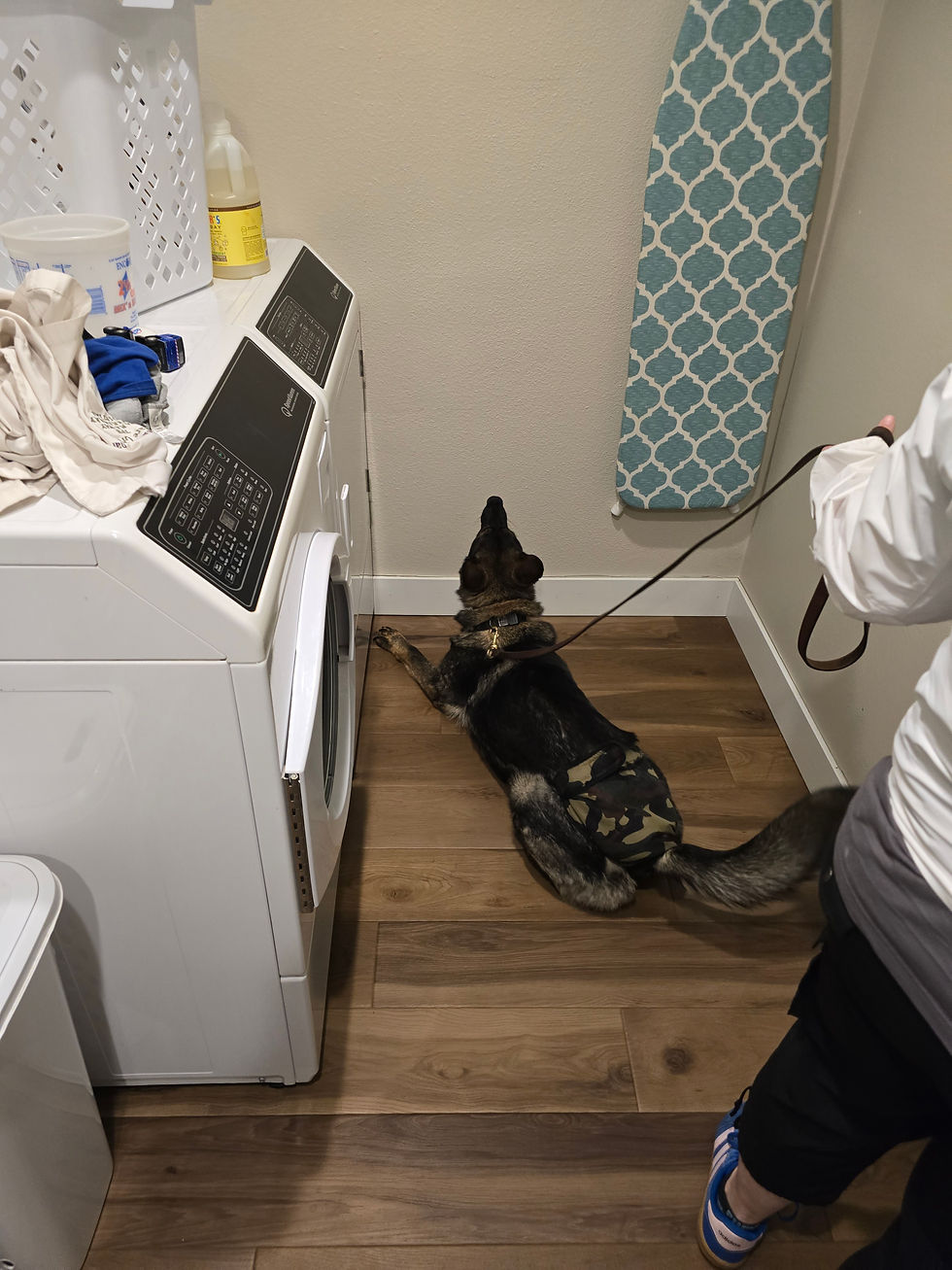
The D&G Approach to K9 Mold Detection: Precision, Training, and Real‑World Skill

When people think about mold detection dogs, they often picture a dog with a great nose and a handler simply following along. In reality, effective K9 detection is a technical partnership, built on science, training, and years of disciplined handling. At D&G, our approach is grounded in professionalism, national standards, and a deep respect for the craft.
Why Mold Detection Dogs Matter
Harmful mold hides behind walls, under flooring, in crawlspaces, and in places no air test can reliably reach. A properly trained detection dog can locate the odor signature of mold long before it becomes visible or causes major damage. But that accuracy only exists when both the dog and the handler are trained to national standards.
Training Starts With Imprinting
A detection dog isn’t born knowing what mold is. They’re imprinted on specific target odors through a structured, science‑based process. This early imprinting builds the foundation for:
- Clear, consistent odor recognition
- Reliable alert behavior
- Confidence in complex environments
- The ability to ignore distractions and non‑target odors
This is not “let the dog run around and hope for the best.” It’s methodical, controlled, and rooted in behavioral science.
Certification Matters — Nationally Recognized, Not Made‑Up Titles
In an unregulated industry, anyone can claim to have a “certified” mold dog. At D&G, we hold certifications from nationally recognized organizations with established testing standards, blind searches, and objective scoring. These certifications ensure:
- The dog can detect the correct target odors
- The handler can read, support, and guide the dog
- The team performs reliably in real‑world conditions
Certification isn’t a trophy — it’s accountability.
The Handler Is Half the Team
A detection dog is only as good as the person holding the leash. And here’s the truth most people don’t want to say out loud:
You are not a good detection handler for the first 3–5 years.
Not because you’re doing anything wrong — but because detection handling requires:
- Thousands of repetitions
- Pattern recognition
- Leash control
- Reading subtle changes in behavior
- Understanding odor movement
- Knowing when to support the dog and when to get out of the way
A great handler learns to trust the dog without influencing the dog. That balance takes time, humility, and mentorship.
Our Style: Controlled, Clear, and Professional
At D&G, we don’t do “hokey pokey” detection. No letting the dog run amuck, no chaotic searches, no guessing. Our approach is:
- Structured: Every search has a plan.
- Safe: The dog works on leash with purpose and control.
- Accurate: Alerts are based on trained behavior, not handler cues.
- Ethical: We provide information, not scare tactics or upselling.
Homeowners deserve clarity, not confusion.
Why Homeowners Trust Our Process
When we enter a home, we bring:
- A nationally certified detection dog
- A trained, experienced handler
- A methodical search pattern
- Clear communication
- Honest results
Our job is simple: find the odor, identify the concern, and give homeowners the information they need to take the next step.
Next up, dog selection!