Why I Do Mold Detection: A Journey From Survivor to Service

Two decades ago, I was sick in a way no one could explain. Doctor after doctor ran tests, prescribed medications, and shrugged when nothing improved. Every new pill came with side effects, but never real answers. I felt helpless, exhausted, and honestly scared.
It wasn’t until my chiropractor/naturopath looked at me and said, “I think you have toxic mold poisoning,” that everything finally clicked.
We traced the source back to something I never would’ve suspected: my Chrysler Sebring convertible. A small leak had turned into a flood, and that dark, damp interior became the perfect breeding ground for toxic mold. I had been breathing it in every day.
That experience changed me. When you’ve lived through the confusion, the fear, and the frustration of not knowing why your body is failing you, you don’t forget it. And you don’t want anyone else to go through it alone.
That’s why I do mold detection.
From Rescue Work to Purpose‑Driven Detection
I run a nonprofit dog rescue, and I’ve always believed that every dog deserves a chance, not just at life, but at purpose. Dogs thrive when their minds are active, when they’re learning, when they feel like they’re part of something meaningful.
So I thought:
What if I could give rescue dogs a job that also helps people?
What if their second chance could become someone else’s lifeline?
That’s where the idea began: imprint rescue dogs on toxic mold odor and create a team that could help homeowners find answers faster than I ever did.
The Dogs Who Started the Journey

Dog #1: Foxy Lady, Who Chose a Different Path
I rescued a tiny 9‑week‑old puppy from a high‑kill shelter, set for euthanasia. We raised her, let her grow, and at about a year and a half, we began imprinting her on mold odor.
She was smart, funny, social, and eager to please. But her heart belonged to obedience and therapy work. She could play the detection game, but she didn’t love it. And a detection dog has to love the hunt.
Today she’s thriving as a therapy dog, a Level 2 movie‑certified dog actor, and an Expert Trick Dog. She’s brilliant, beautiful, and absolutely perfect for my family ~ just not a mold detection dog.
Dog #2: Tango Mango, the Stunning Shepherd With a Different Mission

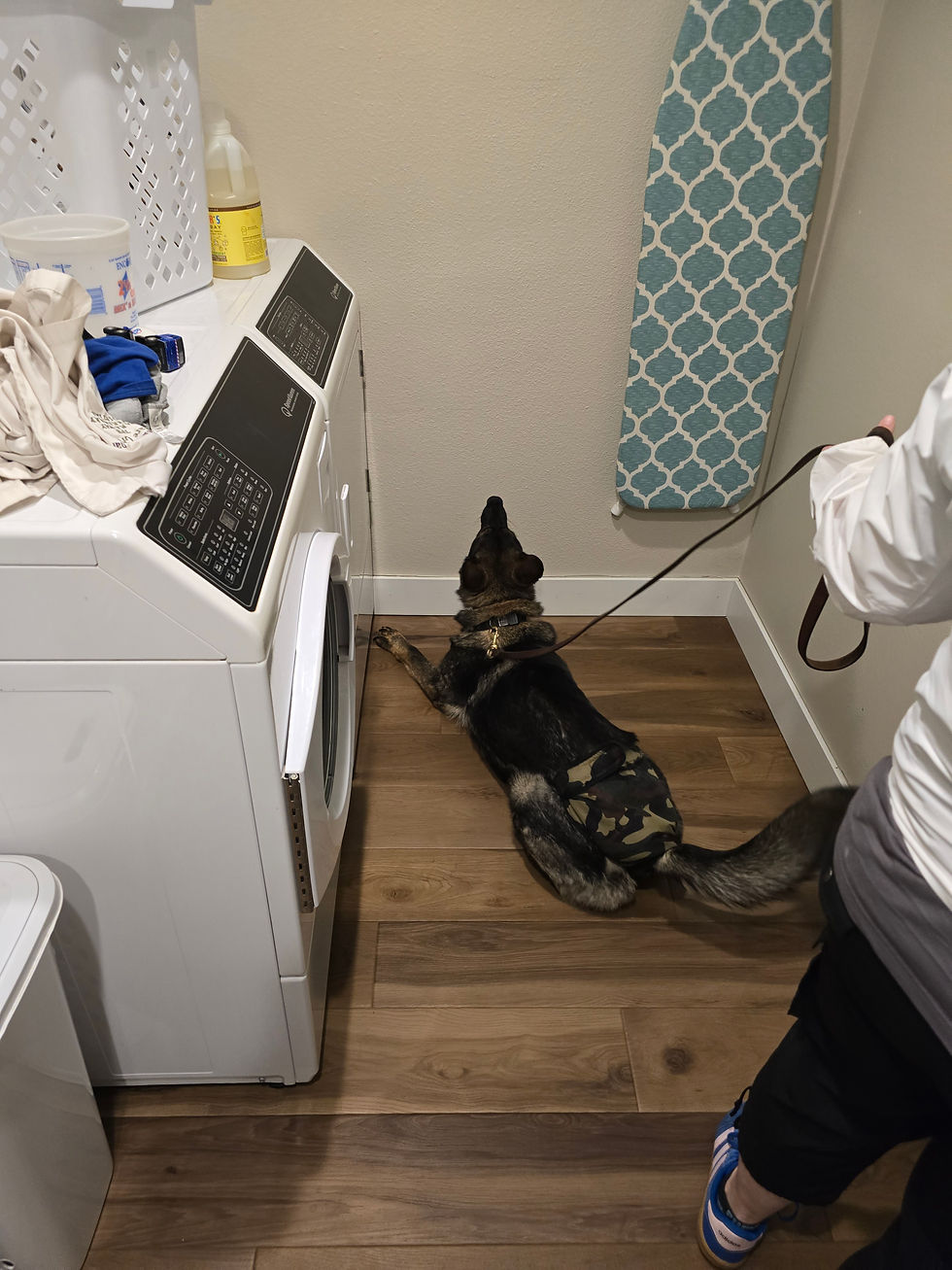
Next came Tango Mango, a gorgeous black German Shepherd puppy from another high‑kill shelter. We started imprinting early, and he did well… but his real focus was on other dogs. He was nervous around them, hyper‑vigilant, and determined to control his environment.
That kind of mindset doesn’t work for detection. A detection dog must be neutral, confident, and able to work anywhere, around anything.
So Tango joined my pack permanently, where he’s safe, loved, and living his best life, just not as a working K9.
The Hard Truth I Learned
Rescue dogs can be incredible. They can be brilliant. They can be loving, loyal, and eager.
But detection work requires something very specific:
Genetic stability
Environmental confidence
High hunt drive
Clear, focused work ethic
A desire to search that overrides everything else
Proper training
My rescue dogs imprinted well, but they didn’t want the job. They’d do two hides and say, “Cool, thanks, I’m done now.” And that’s not a flaw, it’s just who they are.
I realized I needed help. Real help. Professional guidance. And a dog bred for this work.
The Turning Point: Meeting My Mentor
At a working dog conference, I met the person who would change everything, my future mentor, Jody. I had a million questions, and he answered every one of them with patience, depth, and insight I didn’t even know to ask for.
That conversation opened a door I didn’t know existed.
It led me to understand what a true working‑line detection dog is.
It led me to the dog who would finally have the genetics, the drive, and the desire to do the job.
It led me to the next chapter of my mission.
A New Chapter Begins
This is where the story shifts—from trying to make rescue dogs fit the job, to finding a dog born for it. A dog who could help me, help others. A dog who could turn my personal history into a professional purpose.
Because mold detection isn’t just a service for me.
It’s personal.
It’s healing.
It’s a promise that no one else should have to feel as lost as I once did.
And with the right dog, the right training, and the right guidance, that mission finally became possible.